I’ve officially completed my first year as a vendor at the farmers market! 🎉
A little background: I run a home bakery in Southern Maryland selling chunky cookies in a variety of flavors. I started Cookie Cazimi in May 2024, became a seasonal vendor at the oldest farmers market in my area by September, and then was accepted as a permanent vendor the following year.
When I first started vending, I only showed up once a month. Sales weren’t amazing, but I still managed to get two returning customers in just four showings — which felt huge at the time.
In 2025, once I became a permanent vendor, I showed up every Saturday for three months straight. I always knew weekly markets would be hard on me, so when I could feel burnout creeping in, I switched to a bi-weekly schedule, with an extra showing if there were three Saturdays in a month.
Even with fewer showings, it’s been a wonderful and profitable year. And these are the biggest lessons I learned as a first-year farmers market vendor.
This blog post may include affiliate links, which means I may earn a commission if you make a purchase through these links, at no additional cost to you. Your trust is invaluable to me, and I only recommend products that I genuinely believe will benefit you and would personally buy or have bought myself!
Whether or not I earn a commission, these are products I would still recommend. With your support, I’m able to provide you with free information on my blog that is helpful to you.
Your Marketing Copy Sells Your Worth
Every home baker stresses about pricing.
No one wants to turn people off because “anyone can bake,” and yes — you could make cookies at home for about $0.85 each. But what people don’t see is the time, money, and effort it takes to bake dozens of cookies, package and label them properly, carry insurance, and show up with a table, tent, and displays.
I sell my 3.5-ounce chunky cookies for $6 each. My reasoning was simple: if people can buy an $8–$9 coffee that’s mostly water, they can buy a cookie made with European butter, premium chocolate, and real eggs for $6.
That logic made sense to me — but when I first started, I heard everything:
“$6 for a cookie?”
“GOOD LUCK WITH THAT.”
“It’s just a regular cookie with more flour, right?”
Older shoppers were often the loudest. Some would scoff, stop mid-conversation, and literally walk away.
At the time, my display was pretty bare. Eventually, I bought pink dry-erase pocket sleeves and added printed marketing materials — my schedule, the weekly menu, and most importantly, two pieces of copy that completely changed things:
- What “Cazimi” means
-
The ingredients I use in my cookies
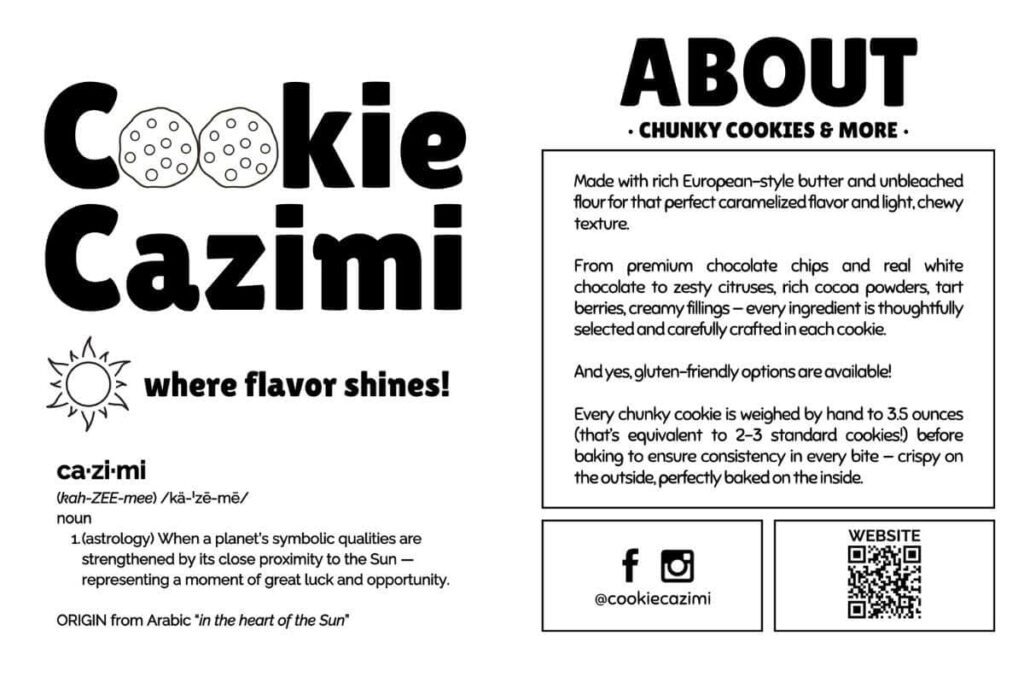
Here’s the thing: you have to tell customers what’s obvious to you.
Of course you’re using high-quality ingredients. Of course you’ve spent hours tweaking your recipe to make it the best thing you’ve ever baked. But they don’t know you.
When you explain who you are and what goes into your product, people become more open — and more confident — about supporting you. Customers want to support small businesses; they just want to feel good about their choice.
Once my marketing copy went up, the pushback stopped.
For a while, I was honestly scared to tell older customers my prices. Now they ask, I tell them, and they buy.
Deals Don’t Just Sell — They Set Expectations
My menu lists all my prices, but I reveal my deals at the table. It feels like a little reward for coming up and buying.
My pricing looks like this:
- 3.5-oz chunky cookies: $6
-
2-oz classic cookies & assorted bakes: $4
My deals:
- Buy 3 chunky cookies → get a $4 item free
-
Buy 5 chunky cookies → get 1 free plus a $4 gift
Funny enough, not many people choose the buy-5-get-1 deal, even though it’s technically the best value. The deal that moves the most product is the gift-with-purchase when you buy three chunky cookies.
People love free stuff. They also like feeling in control. It’s easier to spend $18 than $30, even when both options offer value.
It’s also way easier to convince someone buying two cookies to add one more than to jump from two to seven.
This is another benefit of pricing your products appropriately. I’m not a millionaire because my cookies are $6. When I first started, they were $5 — and I sell more now at a dollar higher.
Because my pricing works, I can offer deals without stressing. I can give more to my customers because of their collective support.
Abundance Is a Feeling, Not a Table Setup
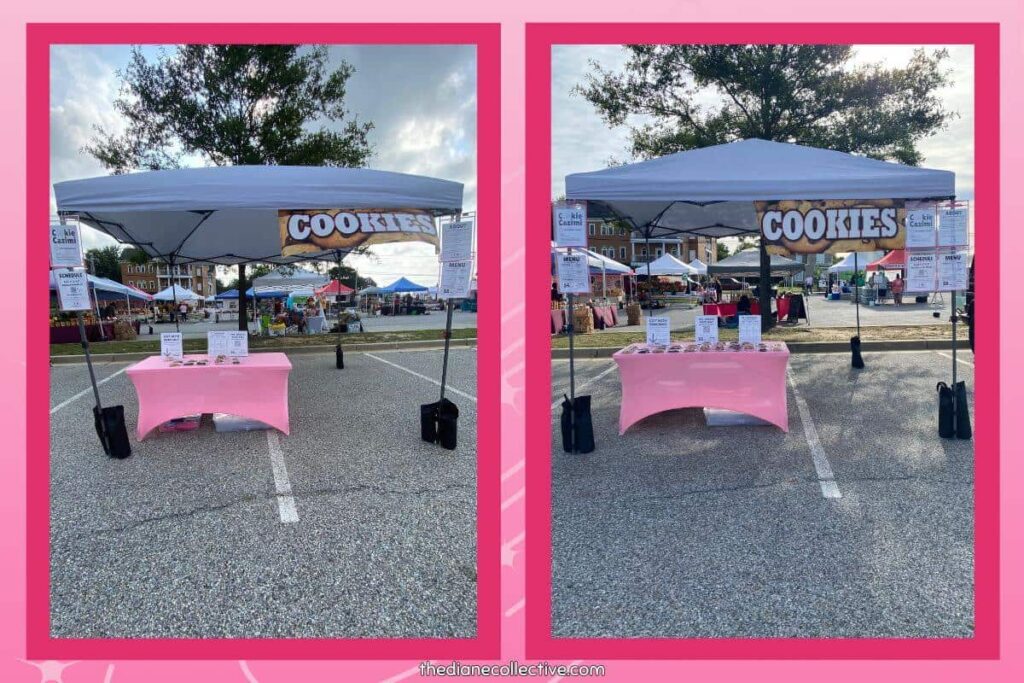
When I first started, my table was simple: a white tablecloth, acrylic signs, and one cookie per flavor.
People constantly asked, “Is this all you have left?”
No — I just wasn’t showing everything.
Other vendors suggested shelves or decorations, but I’m not a decor person. I knew I’d probably hate it and feel like I wasted money.
If you’re like me, here’s the good news: you don’t need decor to look abundant.
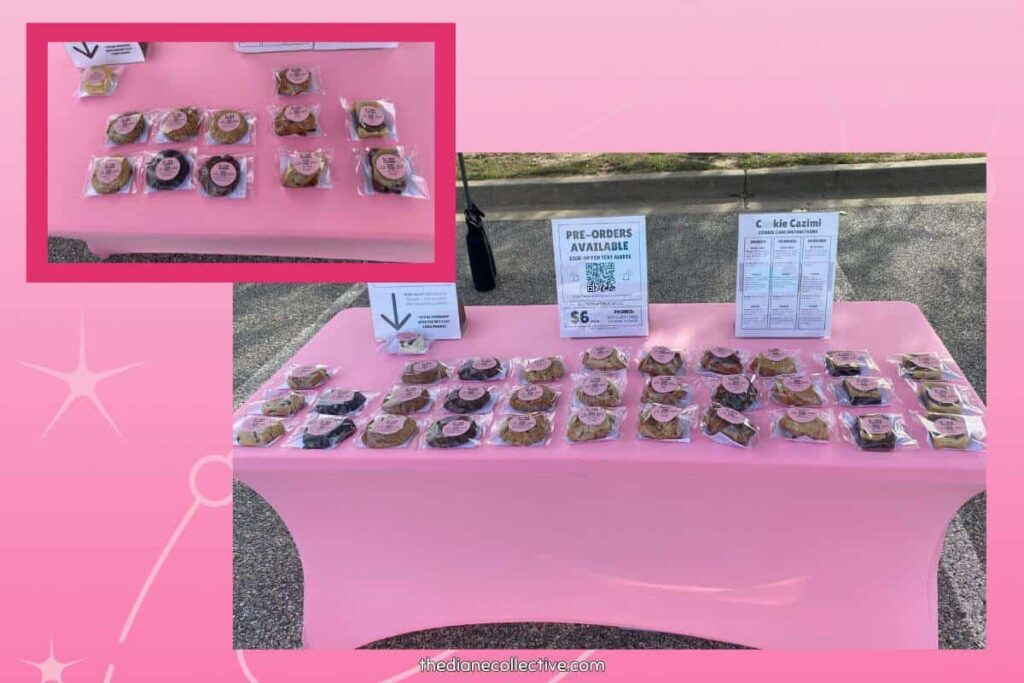
The biggest change I made was putting out more product. Showing three cookies per flavor instead of one instantly made my table feel full and plentiful — at zero cost.
It also helped with flow. If someone bought a cookie, there were still two left on display, and I didn’t have to stall while digging through storage.
With my marketing materials up front, my table finally looked complete — and abundant.
Good Photos Start the Sale Before the Market Opens
I used to take photos in my kitchen, but everything was brown and flat. The cookies were visible, but there was no feeling.
Now, I take photos and videos of my cookies outside in the sunlight on a pink tray.
The difference is wild.
Yes, it’s a little annoying hauling everything outside and back in — and cloudy days suck — but the payoff is worth it.
You don’t need much. I use a phone stand and a tray for branding, but honestly? You mostly just need sunlight.
I use these photos on my preorder page, Instagram, and Facebook. Facebook is especially powerful for local community groups — everyone posts that they’re selling baked goods on Saturday.
So how do you stand out?
By posting good photos.
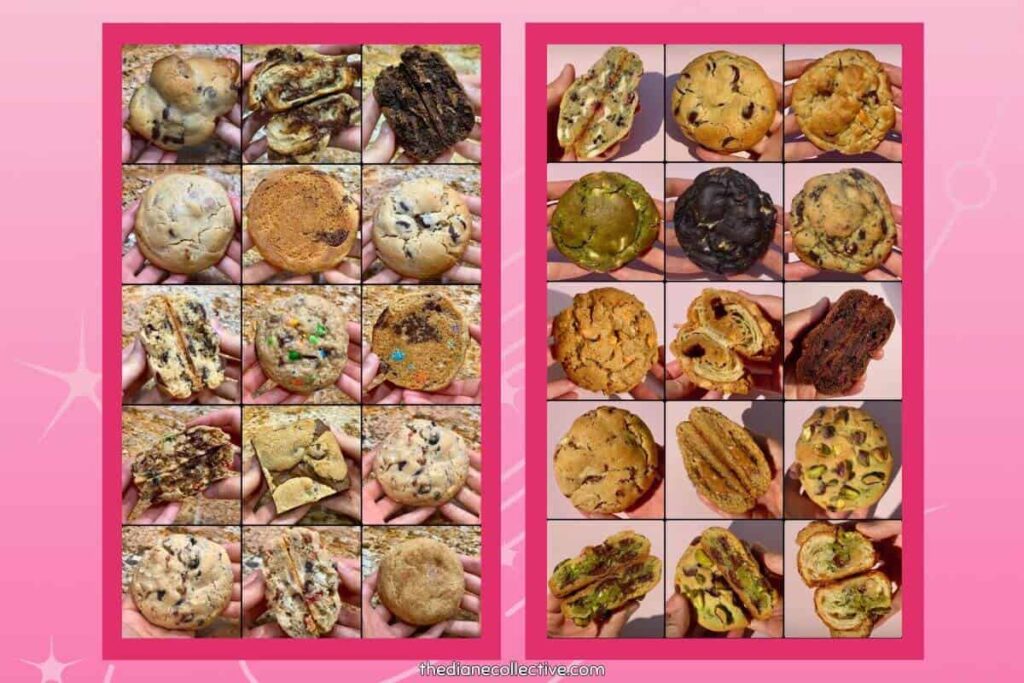
One market, five people told me they came because of my Facebook post.
You’re welcome, everyone else at the market 😂
Now my photos actually create an experience and everyone benefits!
Some People Will Be Rude — That’s Part of the Job
People have told me my cookies are too expensive. Cool — they’re not my customers.
My customers understand the work that goes into what I do. They know I’m not getting rich, but I’m also not drowning. And no one wants cookies from a sad person.
I am not sad. I’m very happy with how this year went — and that energy translates into better food.
That said, I won’t pretend rude comments didn’t hurt. They did. Putting yourself out there is vulnerable, and being shit on for it sucks.
You don’t think it’s worth the price? Fine. Think it and move on. You don’t need to say it out loud.
If this happens to you, write about it. Journal it out. Your feelings are valid.
It’s not a fun lesson — but it’s a real one.
Concluding My First Year as a Vendor at the Farmers Market
I hope this was helpful. I still have a lot to learn — I’ve only sold at one farmers market so far. I also did a fall bazaar at a senior center, which ended up being a surprisingly fruitful day.
If you’re thinking about vending, starting small, or raising your prices — I hope this gives you a little clarity and confidence.